2025
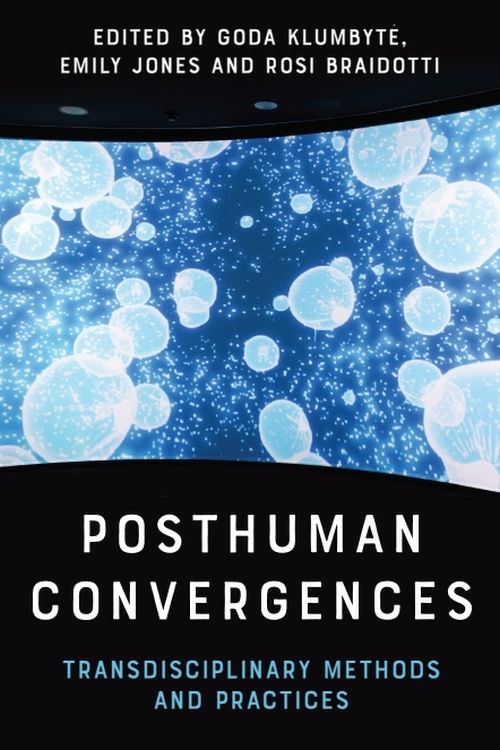
Posthuman Convergences
While posthumanism has gained traction over the past few decades, its application has, so far, mostly been within the humanities. This volume brings together a collection of researchers working both within the humanities and beyond, including in marine biology, computer science, the social sciences, legal studies, decolonial studies, pedagogies, and nursing practice, to focus on methods and practices that showcase how to do transdisciplinary posthuman work.
At a time where the humanities are in question, with multiple departments and faculties being shut down or drastically cut in size, Posthuman Convergences provides a strong example of exactly why the humanities are so vital in the contemporary moment. It showcases a series of ways to help us think differently about the most pressing problems of our times.

2025
Lo Posthumano


2025
Posthuman Knowledge
This book, originally given as a lecture at Harvard University in 2019, is built on the assumption that we are currently situated in a posthuman convergence between the Fourth industrial Age and the Sixth Extinction, between and advanced knowledge economy, which perpetuates patterns of discrimination and exclusion, and the threat of climate change devastation for both human and non-human entities. This convergence calls for a posthuman critical intervention in the form of intersecting critiques of western humanism on the one hand and of anthropocentrism on the other.
2024
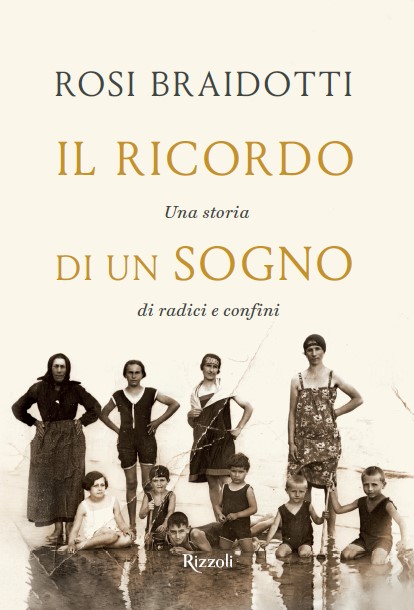
Il ricordo di un sogno
“This non-academic book is dedicated to the memory and history of the women of my family. In their greatness as in their sorrow, they are the link between me and the world. But the tangle of questions they never asked or never answered does not confine them only to a labyrinth of suffering. What shines through in this tale is also their irrepressible strength. And I dare to say it out loud: «we women», so as not to lose myself or the common thread that ties our stories together.”
2024
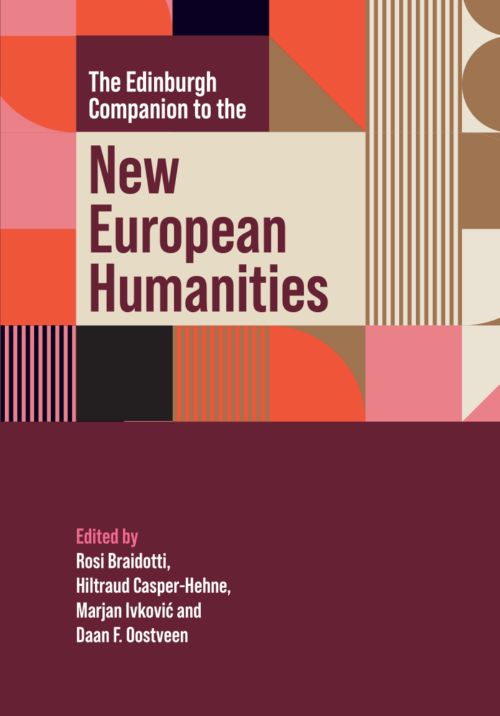
The Edinburgh Companion to the New European Humanities
Assesses the rise of the ‘New’ Humanities alongside the traditional disciplines and inter-disciplinary ‘studies’ areas
- Takes an original approach in its European scope and institutional representation
- Focusses on the ‘New’ or ‘Post’ Humanities
- Incorporates an exceptional degree of inter and trans-disciplinarity, covering areas including the intercultural humanities, post- and decolonial perspectives, digital humanities, medical humanities, environmental humanities and more
- Draws from many European languages and traditions
- Combines theoretical speculation with policy-making pragmatism
This is the first collection that highlights the strengths and contributions of the Humanities in the European region. The volume stresses the positive and multidimensional impact of the Humanities on core areas of human experience, and their ability to formulate new frames to represent our collective and individual relation to the world. Further, it explores new ethical social imaginaries, gendered scenarios and spaces of decolonial transculturality.
This collection also confronts the threats the Humanities face today and proposes ways to respond. These threats include public discourses that question the value of the Humanities; the chronic underfunding of teaching and research at our universities and institutions, and the more fundamental risks to intellectual freedom, democracy and critical discourse, diversity, and the radical imagination posed by political and market forces and organisations.
Overall, this volume proposes innovative tools to increase our collective awareness of forms of injustice, exclusion and the suffering of both the human and the non-human inhabitants of this planet. It discusses the posthuman future of the Humanities and makes recommendations for the implementation of innovative approaches to the Humanities.